
2008 Year in Review
Back to Page two: Other Listing | Back to Year in Review Index
Amaryllis |
|
|
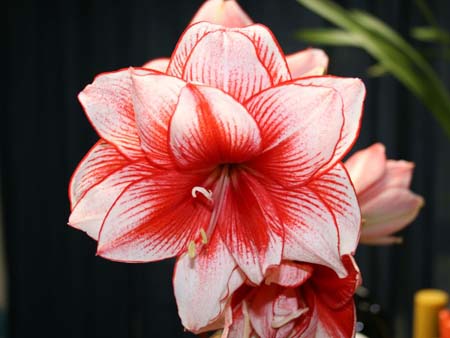
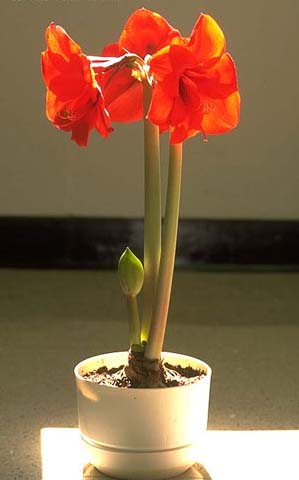
The spectacular amaryllis is a popular flowering bulb during the holiday season that can be enjoyed throughout the winter, said a University of Illinois Extension horticulture educator. "The amaryllis usually has a single flower stalk with two to four four-inch blooms at the top. You may be lucky and get two or three flower stalks per bulb," said David Robson. The blooms resemble lily flowers and come in an array of colors from red to pink to coral and white. The foliage is bright green and strap-like, similar to a bromeliad but generally appears after the bulb is done blooming. "If buying a bulb, which is available from October to March, select a large, fat one at least 2-1/2 inches in diameter," he said. "Bulbs need to be 2-1/2 inches or more in diameter to flower properly. Make sure bulbs are free of any mold or rot. If the bulb feels soft and squishy, avoid it." Amaryllis bulbs are potted, so that one-half to two-thirds of the bulb is exposed above the pot rim. Use a pot that is no more than two to three inches bigger in diameter than the bulb, he recommended. "Leave one-half inch of the pot's rim above the soil line so you can water without spilling over the edge," Robson said. "Use a container that has one or more drain holes in the bottom. Bulbs will rot if sitting in water. "After potting, soak the soil thoroughly. When watering, make sure water comes out the bottom of the pot, but don't let the pot stand in this excess of water; pour the excess off." Flower stalks with several blooms on each should develop in about four to eight weeks if a top-grade bulb was used, he noted. "Be careful not to injure the bulb when staking. Some people stake before planting," he said. "It is possible that one flower stalk will bloom out before another is formed." It is important to keep the soil moist during the flowering period. "The cooler the night temperature, the stronger the stem, and the less likely it will fall over, the longer the flowers will last," he said. "And their colors will remain more intense." Getting the bulb to reflower the next year isn't always simple, but it can be a rewarding challenge. Robson said to cut off dead blooms immediately. However, don't remove leaves that begin to grow after the flower stalks have developed. "Keep the plant moist and in a humid location with bright light to full sun," he said. "Once the danger of frost is over, sink the pot with the bulb into soil outside in a sunny flowerbed and fertilize with a complete water-soluble fertilizer every four to six weeks. "In late summer, gradually reduce watering. When foliage has died down, trim it off--place pots inside where it is cool--40 to 50 degrees--and dry. Lay pots on their sides. The bulbs need a six-to eight-week rest period. The resting period is critical to set the flower buds." Repot every three years or so, he added. "Otherwise, do not disturb roots. Pots should be two to three inches larger than the bulb at planting, but pot-bound bulbs seem to flower nicely year after year with minimal care," he said. by Editor, theCity1.com |
Copyright © 2008 TheCity1.com.
All rights reserved