
2008 Year in Review
Back to Homepage: Local Issues Listing | Back to Year in Review Index
Whiteside Forum - Debate Over Health Care Reform in the US |
|
|
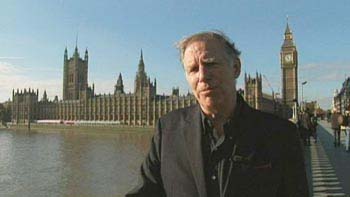
Interested in joining the debate over health care reform in the US? The Whiteside Forum will be hosting a mini-forum on this issue in the program room of the Odell Public Library, Morrison, IL starting at 7:00 pm on Thursday October 23, 2008. This is an update on a Forum event held in October 1992 and we will show a 60 minute video "Sick Around the World" by PBS Frontline hosted by T.R. Reid, followed by a 30 minute discussion. We will attempt to answer the question: other rich countries have universal health care, why don't we? This event is free and open to the public and anyone with a stake or interest in the US health care system is invited to attend. In Sick Around the World, FRONTLINE teams up with veteran Washington Post foreign correspondent T.R. Reid to find out how five other capitalist democracies -- the United Kingdom, Japan, Germany, Taiwan and Switzerland -- deliver health care, and what the United States might learn from their successes and their failures. Reid's first stop is the U.K., where the government-run National Health Service (NHS) is funded through taxes. "Every single person who's born in the U.K. will use the NHS," says Whittington Hospital CEO David Sloman, "and none of them will be presented a bill at any point during that time." Often dismissed in America as "socialized medicine," the NHS is now trying some free-market tactics like "pay-for-performance," where doctors are paid more if they get good results controlling chronic diseases like diabetes. And now patients can choose where they go for medical procedures, forcing hospitals to compete head to head. While such initiatives have helped reduce waiting times for elective surgeries, Times of London health editor Nigel Hawkes thinks the NHS hasn't made enough progress. "We're now in a world in which people are much more demanding, and I think that the NHS is not very effective at delivering in that modern, market-orientated world." Reid reports next from Japan, which boasts the second largest economy and the best health statistics in the world. The Japanese go to the doctor three times as often as Americans, have more than twice as many MRI scans, use more drugs, and spend more days in the hospital. Yet Japan spends about half as much on health care per capita as the United States. One secret to Japan's success? By law, everyone must buy health insurance -- either through an employer or a community plan -- and, unlike in the U.S., insurers cannot turn down a patient for a pre-existing illness, nor are they allowed to make a profit. Reid's journey then takes him to Germany, the country that invented the concept of a national health care system. For its 80 million people, Germany offers universal health care, including medical, dental, mental health, homeopathy and spa treatment. Professor Karl Lauterbach, a member of the German parliament, describes it as "a system where the rich pay for the poor and where the ill are covered by the healthy." As they do in Japan, medical providers must charge standard prices. This keeps costs down, but it also means physicians in Germany earn between half and two-thirds as much as their U.S. counterparts. In the 1990s, Taiwan researched many health care systems before settling on one where the government collects the money and pays providers. But the delivery of health care is left to the market. Every person in Taiwan has a "smart card" containing all of his or her relevant health information, and bills are paid automatically. But the Taiwanese are spending too little to sustain their health care system, according to Princeton's Tsung-mei Cheng, who advised the Taiwanese government. "As we speak, the government is borrowing from banks to pay what there isn't enough to pay the providers," she told FRONTLINE. Reid's last stop is Switzerland, a country which, like Taiwan, set out to reform a system that did not cover all its citizens. In 1994, a national referendum approved a law called LAMal ("the sickness"), which set up a universal health care system that, among other things, restricted insurance companies from making a profit on basic medical care. The Swiss example shows health care reform is possible, even in a highly capitalist country with powerful insurance and pharmaceutical companies. Today, Swiss politicians from the right and left enthusiastically support universal health care. "Everybody has a right to health care," says Pascal Couchepin, the current president of Switzerland. "It is a profound need for people to be sure that if they are struck by destiny ... they can have a good health system." The Whiteside Forum is a nonpartisan, not-for-profit community group, which sponsors presentations and discussions of issues of importance and interest to the public. Issues chosen for conferences have an international dimension as well as local interest and importance. The organization is supported entirely by individual, special and business contributions and all events are free and open to the public. by Editor, theCity1.com |
Copyright © 2008 TheCity1.com.
All rights reserved