
2008 Year in Review
Back to Page two: Other Listing | Back to Year in Review Index
Climbers and Twiners, Vines for the Garden |
|
|
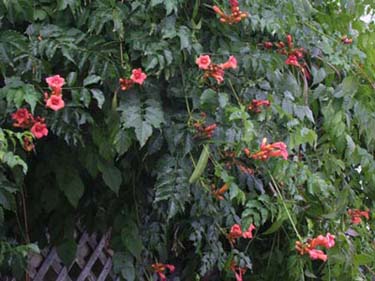
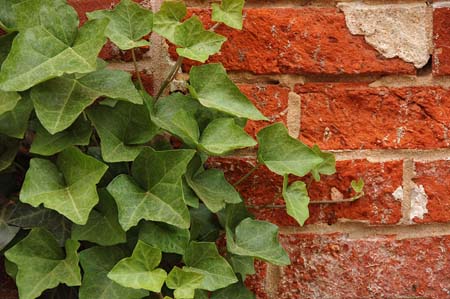
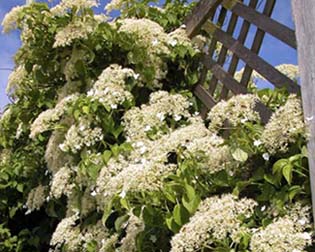
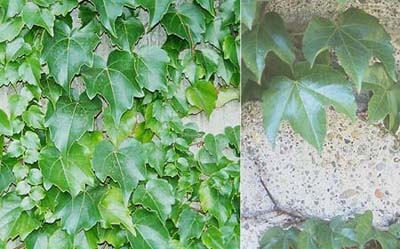
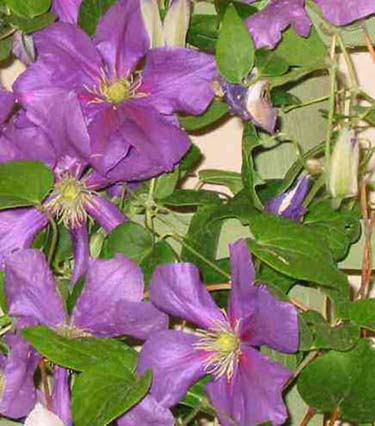
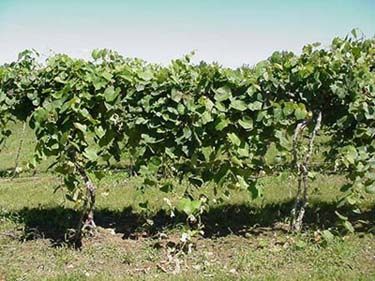
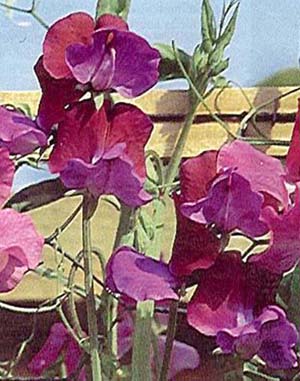
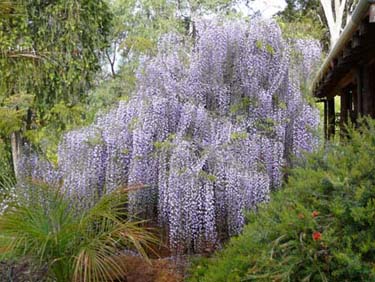
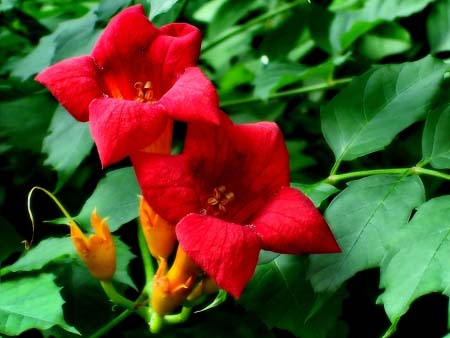
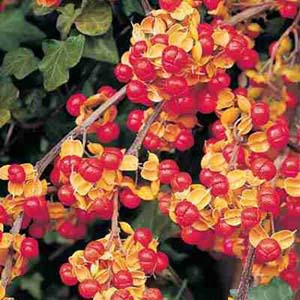
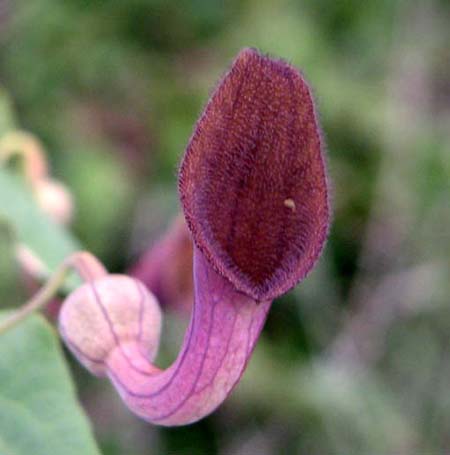
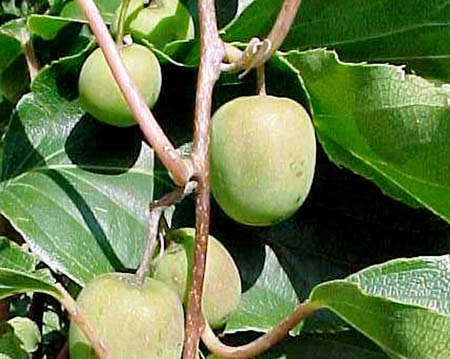
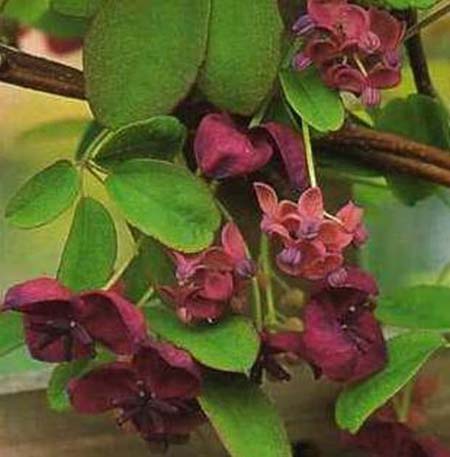
Vines are the upwardly mobile members of the garden community, said a University of Illinois Extension horticulture educator. "They are versatile plants that can cover the sides of structures, ramble over fences, decorate trellises and even be used as groundcovers," said Greg Stack. "Vines are exciting because of their diversity of leaves, flowers, fruit, and structure. They can be considered an integral part of the landscape and in small space gardens here there is plenty of room to 'grow up', they can bring much needed color and interest without using up a lot of space on the ground." Vines can be your garden friend if chosen with some thought as to how big they grow, what type of site you have and what type of structure you are trying to cover. "Vines need to be chosen based upon more than looking pretty," he said. "While many vines are good landscape plants, the wrong vine in the wrong place can soon become a landscape nightmare. Trumpet vine is a good example. While it may sound like all that you are looking for in a vine, fast growth and colorful flowers, one needs to keep in mind that it can consume a structure with its growth and may soon start to pop up all over the yard with its habit of producing underground shoots." Because many vines are opportunistic with long flexible stems that are often not self-supporting, they need help to get off the ground. This might come in the form of a neighboring plant or some type of structure. To be sure you get the most enjoyment from the vine you choose, you need to match the way a vine climbs to the structure you have or are going to purchase. Some vines climb by using aerial rootlets or tiny disk-like structures at the ends of tendrils. These rootlets and disks don't penetrate surfaces but instead secrete a cement like substance that helps them adhere to the surface. Vines with this type of attachment do best on brick, stone, block, bark, or rough wood surfaces. Some examples include English ivy, climbing hydrangea, and Boston ivy. "Vines with tendrils have thin, wire-like appendages that wrap around supports," Stack said. "Tendrils reach out straight and when they contact the support they start to wrap around it. Interestingly enough tendrils tend to wrap around supports in one direction and then will reverse themselves and wrap around the other direction with an equal number of turns. This is thought to prevent snarling. Oh, the wonders of horticulture." Clematis is a plant with leaf stalks (petioles) that act like tendrils. Other vines with tendrils include grape and sweet pea. Vines with tendrils do best on supports such as chain link fence, metal supports and trellises. The twiners round out the group. These vines have stems that spiral around supports. They do best on supports such as chain link fence, poles, tripods, and trellises. Vines such as wisteria, honeysuckle, bittersweet and Dutchman's pipe are twiners. "Once you match the right vine for the support you have, the rest is pretty straight forward," Stack said. "Most vines prefer a full sun location in well-drained soil. "While vines will survive in a shady site, they tend not to thrive. Fertilization is based upon annual growth. A vine that produces exceptional annual growth may not need much supplemental fertilization and will do better if left on its own. If fertilization is needed, use a general purpose fertilizer at about ½ to 1 cup spread around the root zone of the plant." Vines also do best with regular pruning. Annual pruning should be done to remove dead or diseased wood. After that, pruning is done to reduce the size and direct growth. As a general rule, vines that bloom in the spring (on old wood) should be pruned within a week after flowering. If the vine blooms in the summer, they can be pruned in late winter or early spring as they bloom on new wood. The choice of vines can be overwhelming as there are many on the market, Stack noted. Here are a few that are dependable and offer interest. Self fertile hardy kiwi 'Issai' (Actinidia arguta) grows to about 60 feet and is a twiner. It has attractive oval shiny green leaves and white flowers in early summer followed by small green edible fruit. Great for screening. Five-leaf Akebia 'Fruitful Combo' (Akebia quinata) is a truly unique vine. It grows to 40 feet by twining and has leaves that resemble the houseplant schefflera. It produces purple flowers in late summer followed by spectacular bratwurst-shaped fruit in the fall. Also tolerates light shade. Clematis as a group are spectacular vines for their flowers. There are many cultivars on the market. They climb by means of tendril-like leaf petioles and must have a well-prepared site to do well. Some dependable cultivars include 'Jackmanii', 'Arctic Queen', 'General Sikirski', and 'Warsaw Nike'. All are vigorous growers and bloom June through September. Also consider planting species clematis. Though the flowers tend to be smaller, they offer the advantage of being more drought and heat tolerant and have resistance to stem rot. Look for 'Bluebird', 'Sweet Autumn Clematis' and 'Golden Clematis.' Boston ivy is a reliable vine for covering rough-textured surfaces. It is a vigorous vine with medium green leaves that turn a shiny red-purple in the fall. In addition to the standard Boston ivy, there is 'Fenway Park', a golden-leaved selection and 'Lowes,' a very small-leaved selection good for smaller spaces. Climbing hydrangea (Hydrangea anomala petiolaris) is considered to be the Cadillac of vines. It is a vigorous grower to 50 feet and climbs by means of aerial rootlets. The foliage is a light green, and very large panicles of white flowers are produced in the summer. The foliage turns yellow in the fall, and the stems have attractive cinnamon-colored exfoliating bark. "If vines are on your list of plants to add to the garden, be sure to choose the one that matches the conditions you have, the area you want to cover and that it's suited for the type of structure you want to cover," Stack said. "Once that decision is made, then you can be assured of adding a plant that will offer interest and often flowers to your garden and that both you and your upwardly mobile garden resident will be happy." by Editor, theCity1.com |
Copyright © 2008 TheCity1.com.
All rights reserved