
2004 Year in Review
Back to Page two: Other Listing | Back to Year in Review Index
Caring for Poinsettias |
|
|
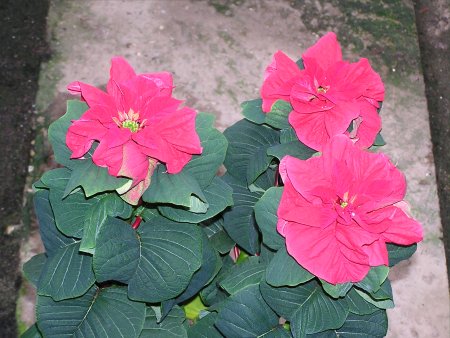
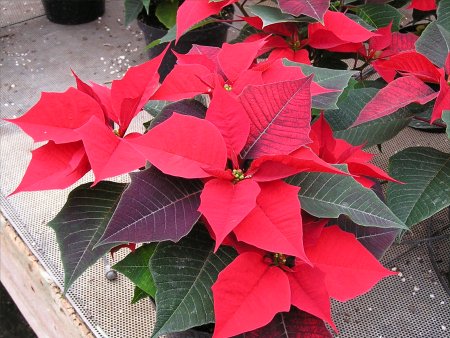
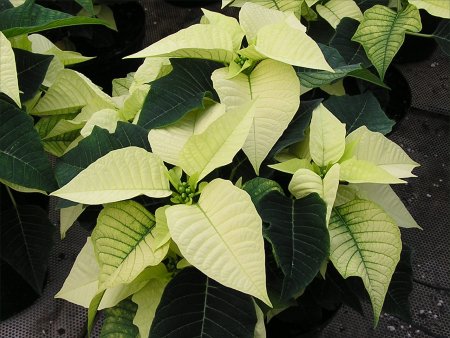
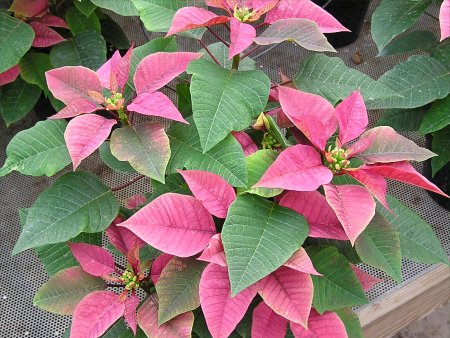
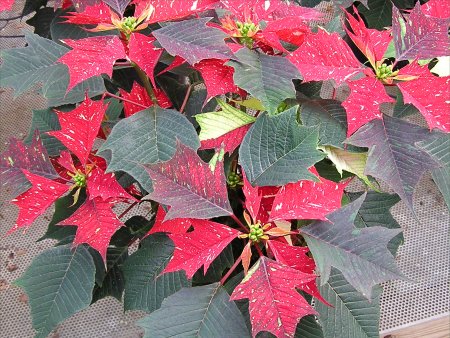
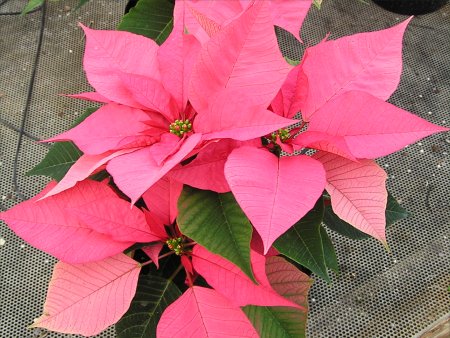
Providing proper care can ensure that the holiday poinsettia brightening your home retains its beauty for several weeks, said a University of Illinois Extension horticulture educator. “In fact, some varieties can retain their beauty for several months,” said Susan Grupp. “And while traditional red is the most common color, there are other colors worthy of consideration. While many of us are accustomed to seeing red, pink or creamy white varieties; breeders have also introduced other choices. Two-tone selections such as various mottled patterns of red and pink or pink and white have become popular. There are even yellow, peach, burgundy and dark purple varieties.” All the varieties, though, have common needs, she said. "You should start by taking the time to choose a healthy, high-quality plant,” Grupp said. “Look for plants with foliage all the way down to the pot rim. All foliage should be nice, dark green. Avoid plants with yellowing leaves or wilted leaves. Inspect the plant on all sides and find one that is well-balanced and full.” The maturity of a plant can be determined by looking closely at its flowers, she added. The colorful “flowers” are really a combination of bracts (specialized leaves which color up during shorter day lengths) and cyathia (the true flower), which are bead-like structures located in the center. These bead-like structures should be green or red-tipped. Older, mature flowers have yellow pollen, and may not last as long. Avoid plants that are displayed in paper or plastic sleeves, or crowded tightly together. They tend to deteriorate too quickly, she said. “Some poinsettias are tropical, they must be protected from cold temperatures,” Grupp said. “They should be properly wrapped before leaving the store. During very cold weather, ask to have them double-wrapped. Never leave them in an unheated vehicle. “Once home, be sure to remove the protective sleeve immediately. Place your plant in a bright sunny spot in the house, taking care to avoid drafty locations. Do not allow them to touch cold glass windowpanes. Keep poinsettias away from radiators and other heat sources. Poinsettias will do best in daytime temperatures of 65-70 degrees and night temperatures around 55 degrees. High temperatures tend to shorten the plant’s life.” Grupp said that proper watering is also important. Check the plant’s soil daily. When the soil surface begins to dry, it is time to water. “Remove any protective or decorative pot-cover and water the plant thoroughly,” she said. “Water should drain freely from the pot. If water collects in a saucer or decorative pot liner, be sure to empty it right away. Do not allow the plant to dry completely. This will cause wilting and leaves to drop. “While the plant is in bloom, fertilizer is not needed. by Editor, theCity1.com |

Copyright © 2004 TheCity1.com.
All rights reserved