
2003 Year in Review
Back to Homepage: Events Listing | Back to Year in Review Index
Harvest is One of the Best! |
|
|
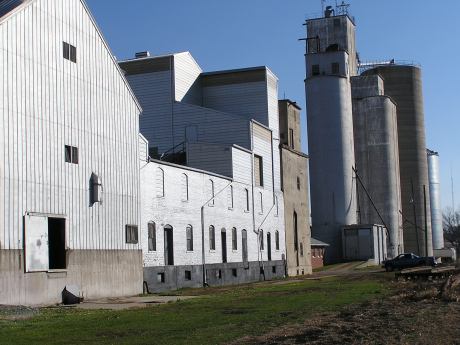
“The best corn crop ever,” is what some farmers in the Morrison area told Tiny Vandervinne, a thirty year veteran of Morrison Elevator. While farmers in southern Wisconsin were chopping their corn for silage because the crop was so terrible, area farmers are bringing in 200 plus bushels per acres, some even as high as 220-230 per acre. This is the third year of good corn crops locally. Not only is the yield good but also the moisture content is 15-19, average for a crop, which means less drying and more profit. “Good dirt” is what Vandervinne credited this year's large crop locally to. “We have black dirt to the south of 30 and clay to the north. They both hold moisture and are very deep soils. It lets the root systems go deeper.” Basically the harvest is over and most of the farmers have already brought their loads into the elevator. On the other hand, the soybean yield was down as much as 1/3 to ½ from past years. Vandervinne attributed “early planting and cool damp weather early on”. It stunted the plants and did not let the root system get deep enough. Then when August was short on moisture, the beans could not develop. Lastly the soybean aphids attacked the already stressed plants. So the plants and beans were smaller. The price of soybeans and corn both went up during the harvest, an unusual aspect of this year’s harvest. Beans are up to $7.50 per bushel (not long ago they were around $5) and corn is at $2.17. “China is buying a lot of beans currently. Other countries, like South America, raise beans but America is the only county to raise corn. That will keep prices decent,” according to Vandervinne. The Elevator stores corn and soybean for smaller farmers who do not have storage facilities and for larger farmers who have filled all their bins and need more storage. They can store 500,000 bushels of corn and beans in Morrison but have more corn than beans. Farmers bring the loads to town in trucks and wagons, and then pay storage on their grain by the month on the amount of bushels stored. When they are ready to sell, like in December or when the river opens in March, they sell to the Elevator. The Elevator then sells it and trucks it to Bunge in Albany, Agri Grain in Fulton, or Rock River Lumber and Grain in Sterling. It is loaded onto both barges and rail then sold for livestock feed in other areas. About 50% of the Elevator’s business is in selling chemical and fertilizers to farmers. The business is always changing because farms are getting bigger. They cater to the smaller farmer because the larger operations have their own grain grinders and storage. Privately owned stockholders own the Farmer’s Elevator. Most are farmers and have owned the stock for many years. They have about 800 patrons (farmers) each year and each patron is allowed one vote at their stockholders meeting. “Agriculture is important to this community,” Vandervinne emphasized. by Barb Benson, theCity1.com |
Copyright © 2003 TheCity1.com.
All rights reserved